$0,00
Checkout7 most important questions about mineral powder
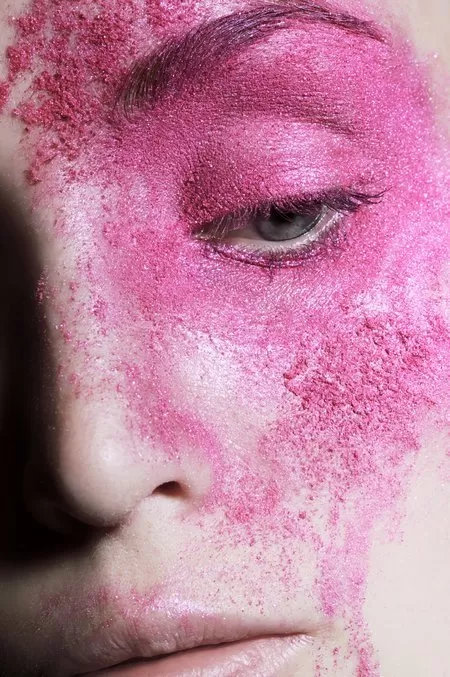 The appearance of mineral powder in the ranks of the make-up base was imperceptible: for a long time no one understood why "torment" with loose powder that needs to be applied in a certain way, when there are so many other more convenient options around - a compact powder and a foundation, tonal cream, mousse, fluid ... But over time, the benefits of "mineral water" became so obvious that even those who swore to never take a kabuki brush ran into the camp of its fans. If you are looking with interest in the direction of mineral powder or have already bought the coveted jar, but at the same time you have a lot of questions about its use, combination with other products, properties and the reality of benefits, make yourself comfortable: we will answer the 7 most important and frequently occurring questions about natural loose mineral powder.
Is Mineral Powder suitable for oily and problematic skin, but not suitable for dry skin?
Indeed, the owners of oily, combination and problem skin with rashes, acne and other troubles were primarily interested in mineral water - for a simple reason: natural mineral powder matted remarkably and did not worsen the skin condition, did not aggravate inflammation, pimples and irregularities. Therefore, the glory of "powder for problematic" was fixed for the mineral powder. In reality, mineral water is perfect for any skin type. One "but": since this is a dry product, it does not "smooth" peels and irregularities, hence the feeling that the powder emphasizes dry skin. But this is not a problem of the powder itself, but of the correct preparation of the skin: if a day moisturizer has been previously applied to it, then there will be no emphasis and even more drying out during the day.
Which brush is suitable for applying mineral powder?
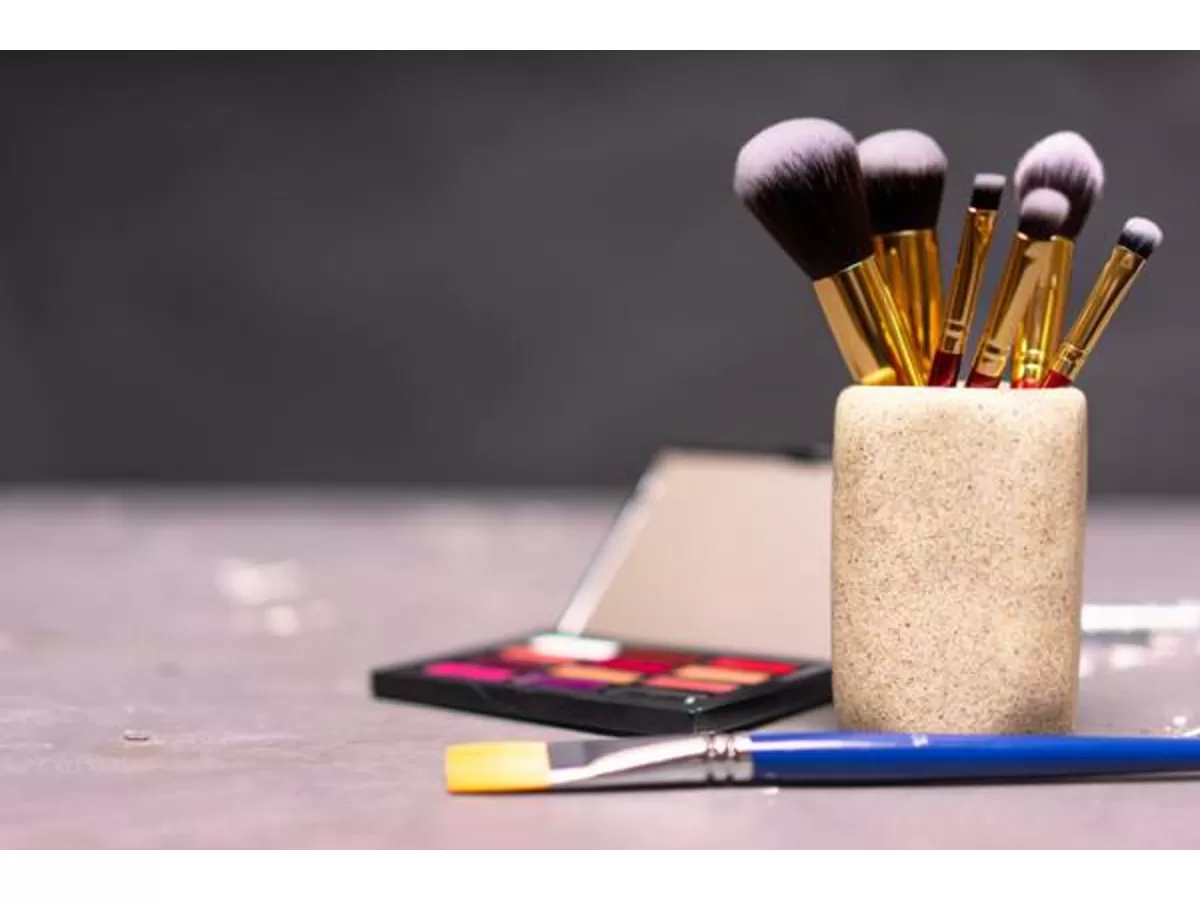
The ideal brush for applying loose powder is a large and slightly rounded kabuki brush (most often labeled "for loose powder" or simply "for powder"). It is important that it is dense - not as dense as brushes for applying liquid foundations, but rather thick, elastic. If the brush is too loose and sparse, then the powder will simply "fall through" into it, and the application will turn into a continuous torment. The bristle of the brush should be hypoallergenic synthetic, it should be soft to the touch, not scratching or irritating the skin. If you also use mineral blush, bronzer, highlighter, an additional blush brush will do the trick - it's the same as for powder, but usually a little smaller and sloped. However, you can get by with one brush if you are not doing complex sculpting.
How to prepare your skin for mineral powder?
And what about the correction? Can I use a creamy concealer or even BB cream and apply mineral powder on top? Let's figure it out in order. Firstly, the mineral powder itself does not contain any moisturizing or emollient ingredients, so it is important to apply your base day cream under it, preferably with a moisturizing effect. This is a mandatory step. As for the correction, it is worth looking at the condition of your skin. If you have skin without any problems, but you want, for example, to cover up dark circles under the eyes, you can do this by shading the concealer well. But if you have problem skin, then covering up pimples and acne will negate all the benefits of applying mineral powder. In this case, it is better to use a mineral corrector (there are color correcting powders and mineral primers with the effect of smoothing out defects) or at least a product with a natural composition.
How to apply mineral powder correctly?
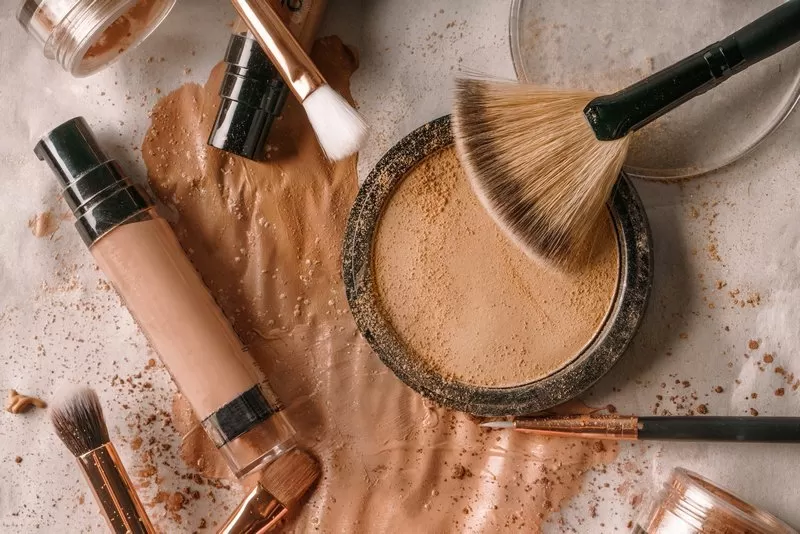
Loose mineral powder is often mistakenly applied by driving the powder into the skin: it is drawn onto a brush and the product is pushed in with patting movements. It is not right! For correct application, pour just a little bit of powder into the cap, pick it up with a brush so that the powder is well distributed over the surface of the brush, and then apply it to the skin in a circular motion - sanding. As if you rub a silver tray with a soft brush until it shines. Pay attention to the pressure of the brush: you do not need to do it with effort, stretching the skin, the brush should walk over the skin thoroughly, but gently, with its tips. Repeat the process as many times as necessary: put a little powder on the brush and carefully apply it by sanding with a thin, thin layer. By the way, this is another significant advantage of friable mineral powder: thanks to application in several translucent layers, the powder does not crumble on the face, it lasts better and longer, looks more natural, does not print on other surfaces when touched.
Why do you need a transparent mineral powder?
With the usual, classic tonal powder, everything is clear, but why are there translucent or transparent mineral powders? In application, they work in different qualities at once:
- As a stand-alone powder. For a nude make-up, when you apply a translucent mattifying powder over moisturized skin (or over applied SPF cream) - and that's it. Your face, strictly speaking, is not painted, but at the same time the skin looks well-groomed, it is protected, shines less, the tone is smoother and more beautiful. Not a bad option for every day.
- As a primer. You can apply a little translucent mattifying or smoothing mineral powder underneath your foundation to make it fit better, so that your skin is smoother and softer.
- As a finish (veil). On top of the foundation powder, you can apply not only a loose mineral highlighter, but also a translucent powder, which will further strengthen the makeup and make the complexion smoother.
Read the sheer powder annotation: some are for matting, some for a subtle shine, while others, for example, smooth, brighten, warm skin tone, and so on. Hence the choice of application: it is more appropriate to apply the matting transparent powder directly to the skin, and the powder with shimmer - over the tone.
Does mineral powder really protect against ultraviolet radiation?
If the manufacturer added such a function when drawing up the powder formula, then definitely yes! Titanium dioxide and zinc oxide are recognized natural UV filters, and they are in the vast majority of cases found in mineral powders. Therefore, if they are added in the correct amount, then such a mineral powder provides protection from ultraviolet radiation. Another question is how much SPF? Typically, a mineral powder "pulls" at SPF10-20, but if desired, the manufacturer can bring the SPF of the powder to 30 without loss of properties. So pay attention to the labeling of the powder and its composition. If SPF is not reflected on the powder, then, most likely, the concentration of titanium dioxide and / or zinc oxide is too low - up to 5%, and such a powder does not in any way affect the protection of the skin from ultraviolet radiation.
Is Mineral Powder the Best Choice for Problem Skin?
For the owner of problem skin - oily or combination, with a tendency to inflammation, pimples, acne - choosing a foundation can turn into a nightmare, because 99% of the funds will clog pores, aggravate rashes and inflammations, thereby plunging you into a vicious circle: you use foundation to cover up imperfections, and this very foundation only worsens the situation. Mineral powder is truly the safest and healthiest option for this type of skin. It does not clog pores and affects the skin as neutral as possible, especially if you choose a good cream for it that works with your problems. The main thing for you is to choose a truly natural mineral powder that contains only minerals, without adding potentially problematic ingredients.
Photos
09/04/2020 03:57:06
Comments:0
Views:1152
Comments